
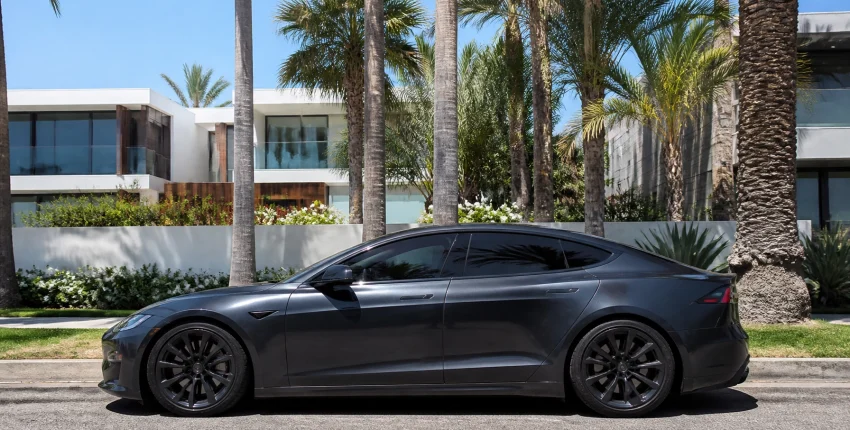
Driving an electric vehicle (EV) in Southern California is often a dream. Between the HOV lane access and the silence of the motor, it’s the perfect way to navigate the sprawling layout of our city. However, any local driver knows that the Los Angeles sun is relentless. For owners of Teslas, Rivians, Lucid Airs, or the latest European EVs like the Porsche Taycan and Audi e-tron, that sun creates a specific set of challenges that go beyond just a hot seat.
If you’ve ever felt like you were sitting inside a greenhouse while stuck in traffic on the 101, you aren’t imagining it. Modern EVs are designed with massive amounts of glass: from panoramic roofs to expansive windshields: to create a sense of space and luxury. While beautiful, this design makes your car a primary target for heat soak. This is where ceramic window tinting becomes more than an aesthetic choice; it becomes a critical upgrade for your vehicle’s efficiency and your own comfort.
The Glass House Dilemma: Why EVs Get Hotter
Most modern electric vehicles lean heavily into “glass-forward” design. A panoramic glass roof is a signature feature for many, offering stunning views of the California sky. But in a climate like ours, that glass is essentially a giant heat conductor. Standard glass, even if it has a factory “privacy” dark tint, is often surprisingly poor at blocking the actual heat-causing infrared (IR) rays from the sun.
When your car sits in the sun at a parking lot in North Hollywood, the interior surfaces: the dashboard, the seats, and the steering wheel: absorb solar energy and radiate it back as heat. Because EVs are so well-insulated for sound, they also tend to trap that heat remarkably well. The result is a cabin that can easily reach 130°F or higher on a typical 90-degree LA day. For EV owners, this isn’t just an inconvenience; it’s a direct hit to the car’s performance and your daily driving experience.
Ceramic vs. Traditional Tint: The Science of Heat Rejection
When searching for car window tinting in Los Angeles, you’ll likely see a variety of options ranging from budget-friendly dyed films to high-end ceramic coatings. It’s important to understand the difference, especially for high-tech vehicles.
Traditional dyed tint works by absorbing sunlight into the film, which darkens the window but does very little to stop the heat. Over time, these films are notorious for fading, turning purple, or bubbling. Metallic tints are better at reflecting heat, but they come with a major deal-breaker for EV owners: they can interfere with radio, GPS, and cellular signals. In a car that relies on constant connectivity for navigation and over-the-air updates, metallic tint is simply not an option.
Ceramic window tinting is the gold standard. It utilizes non-conductive, non-metallic ceramic particles that are small enough to be invisible to the naked eye but powerful enough to block up to 99% of UV rays and a massive percentage of infrared heat. Because it’s non-metallic, it has zero impact on your Bluetooth, Wi-Fi, or cellular signals. It’s the “invisible shield” that keeps the heat out without compromising the technology that makes your EV special.
Boosting Your Range: How Tint Saves Your Battery
One of the most overlooked benefits of ceramic tint for drivers in Los Angeles is the impact on vehicle range. In a gasoline car, the air conditioning system is powered by the engine’s waste heat and belt-driven compressors. In an EV, the AC is a significant drain on the high-voltage battery.
When your cabin is 120°F, your car has to work incredibly hard to bring that temperature down to a comfortable 70°F. The fans run at max speed, and the thermal management system works overtime. By installing a high-quality ceramic film, you can reduce the interior temperature of your car by as much as 20–30°F.
This means:
- Reduced AC Load: Your climate control system doesn’t have to work as hard to maintain a comfortable temperature.
- Increased Efficiency: Studies have shown that reducing the cooling load can improve EV range by up to 10-12% during peak summer conditions.
- Battery Longevity: Heat is the enemy of lithium-ion batteries. By keeping the entire vehicle cooler, you reduce the strain on the battery’s thermal management system, potentially extending the long-term health of your pack.
Whether you are commuting from the Valley to Santa Monica or heading out for a weekend trip, those extra miles of range add up, giving you more freedom and less “range anxiety.”
Protecting Your Tech and Your Skin
The Los Angeles sun doesn’t just heat up your car; it actively degrades it. The interior of a modern European EV is a masterclass in materials, often featuring premium vegan leathers, delicate wood trims, and massive touchscreens.
Unprotected exposure to UV rays leads to:
- Material Fading: Dashboards can crack, and seats can lose their vibrant color over just a few years of LA sun exposure.
- Screen Damage: High temperatures can affect the longevity of the liquid crystals in your car’s infotainment screens.
- Skin Protection: Driving for hours in the California sun is equivalent to spending that time outside without sunscreen. Ceramic tint provides a SPF rating of over 1000, protecting your skin from the harmful UVA and UVB rays that cause aging and skin cancer.
At The Auto Lounge, we often see high-end vehicles coming in for maintenance and repairs where the interior has clearly suffered from sun damage. Taking the preventative step of tinting your windows is as essential as any mechanical service we provide.

Navigating California Tint Laws
One concern many drivers have is the legality of window tinting. California law is specific: the windshield and front side windows must allow a certain percentage of light through. However, the beauty of ceramic technology is that you don’t need “limo tint” to get the heat rejection benefits.
You can choose a “clear” ceramic film for your windshield and front windows that is virtually indistinguishable from factory glass but still blocks the majority of heat and 99% of UV rays. This allows you to stay within legal limits while still enjoying a significantly cooler cabin. For the rear windows and the panoramic roof, you can go as dark as you like to increase privacy and style.
Why The Auto Lounge is the Choice for EV Owners in North Hollywood
Choosing the right shop for window tinting in North Hollywood is about more than just finding the lowest price. It’s about finding a team that understands the complexities of modern, high-end vehicles. Electric vehicles require a delicate touch: water management during the tinting process is crucial because of the sensitive electronics located near the windows and under the dashboard.
At The Auto Lounge, our team has over 30 years of combined experience working on luxury and European makes like BMW, Mercedes, Audi, and Porsche. We treat every EV with the specialized care it deserves, using advanced techniques to ensure a flawless, bubble-free finish that lasts for years.
Beyond tinting, we offer a full suite of customization and protection services. Many of our clients choose to pair their window tint with XPEL Paint Protection Film (PPF) to protect the exterior from road debris while the tint protects the interior from the sun. It’s the ultimate “peace of mind” package for any new car owner.
Conclusion
Ceramic window tinting is no longer just an “extra” for car enthusiasts: it is a functional necessity for anyone driving an EV in the Los Angeles area. From protecting your health and your car’s interior to measurably improving your driving range and comfort, the benefits are clear.
Don’t let another summer afternoon turn your premium electric vehicle into a sauna. Whether you’re looking for a subtle, clear heat shield or a sleek, dark aesthetic, our experts are ready to help you find the perfect solution for your vehicle.
Is your EV ready for the heat? Contact us at The Auto Lounge today to schedule your ceramic window tinting appointment or stop by our shop in North Hollywood to see our gallery of work in person. Let’s keep you cool on the road.